People
Posted: 6th March 2026
What drew you to this type of work?
I was drawn to this type of work many years ago due to experiencing a certain amount of disadvantage in my own life, but also having a father who was an example to me in his faith and compassion.
I grew up in a pretty poor household. My father was working class and lost his job in the 1980s. He was out of work for a decade.
My mother is German and I have a German name – Wilhelm – which caused me challenges growing up. At school I was both the German and the poor kid. I got my cousin’s hand-me-downs from Germany – fashion was years behind there compared to the UK. We didn’t have a TV or phone until I was nine or ten, and we never had a car.
So, I grew up understanding the limitations you have if you don’t have money and are an outsider. This wove into me a strong sense of wanting to help people. I understood and still understand what it felt like to be on the outside, to not have the things other people take for granted.
Although my father had very little, he prayed with me and my brother every day. He took us to church, and he read stories about Saints from the past. Throughout his life he cared for other people who were poor or facing lack of fairness or justice. In many ways he modelled a way of being that inspired me.
What’s a project or moment that exemplifies why Mission Direct’s work matters?
The school with the three classrooms in Zambia is a good example (referred to in part 1) because it demonstrated that we completed projects that other organisations had left unfinished and abandoned.
Another example comes from last year in Uganda. When our volunteers visited a medical clinic in Kumi, they were shown many oxygen tanks but only one regulator. This meant that the staff at the clinic regularly needed to choose between different patients who required oxygen because only one person could receive it at a time. This meant that they were making life and death decisions simply because of a lack of equipment.
When the volunteers heard this, they donated enough money to purchase four more regulators so that up to five patients at a time can have oxygen treatment if they need it. They had the means to do so and were motivated by compassion because they were there, and they were able to resolve the situation immediately. Countless lives will be saved as a result of a decision that was only possible because volunteers witnessed the problem first hand.
A final example is the Harvest of Hope School in Phnom Penh, Cambodia. Phnom Penh is built on a swamp, and this school is situated in one of the poorest areas of the city, which has undergone a great deal of development. Parts of the city are like any first world location with hotels, good roads and beautiful places to go – while other areas are still very poor. As a result of the development work, the water table has changed and many of these poorer areas now flood regularly.
Mission Direct had worked with the school before and due to remaining in contact and regularly visiting it, we were able to be aware of the developing problem. It was decided that the school could not be moved because there was no alternative available land in that community, so we demolished and rebuilt it after raising the existing plot of land sufficiently so that it would no longer flood. This has meant that the children in that area can continue to receive a high-quality education in a safe and hygienic environment.
If you go to church for most of your life, you will hear about missions. I remember in my youth thinking, I am meant to do something with my faith – what will I do?
But you can do quite a lot. You can sacrifice a holiday and be part of changing lives, and your own in the process. It takes people out of their comfort zone and the artificial restrictions in their lives. People discover they’re capable of far more than they thought.
How do you see Mission Direct’s role in international development evolving? What does responsible partnership look like in practice?
I’ve worked in international development for over 30 years. In that time, I’ve done training and visited lots of countries to see different approaches, and things change. We have to keep learning and adapting.
There are two books that have really shaped my thinking: ‘When Helping Hurts’ and ‘Toxic Charity’. Those books are about the unintended consequences of poorly conceived charity – the dehumanisation and lack of agency it can create in the people being ‘helped’. It’s not good enough to have good intentions. You need to think carefully about how your help actually impacts people. This is only possible when we follow the lead of those who know what is best for their community. So, when we work overseas, we are partnering with inspiring leaders to help them to realise their vision for their community and not ours.
People ask us why we don’t just send the money, but that doesn’t always work as well as people think. Practically being side by side with our partners means much more to them, and we are able to achieve so much more together working in real and tangible partnership.
What’s missing in a lot of international development work is the relational part. This really matters. When people go on our trips, this isn’t their employed job. They’re giving their time voluntarily. None of our overseas staff are employed by Mission Direct either. Everyone wants to be in that country. They’re there because they’re committed to the communities where they are serving and because they are motivated by faith.
What keeps you motivated during challenging times?
In my job all the problems filter to the top. That’s the nature of leadership. But I know what we’re doing matters, which motivates me. It becomes personal.
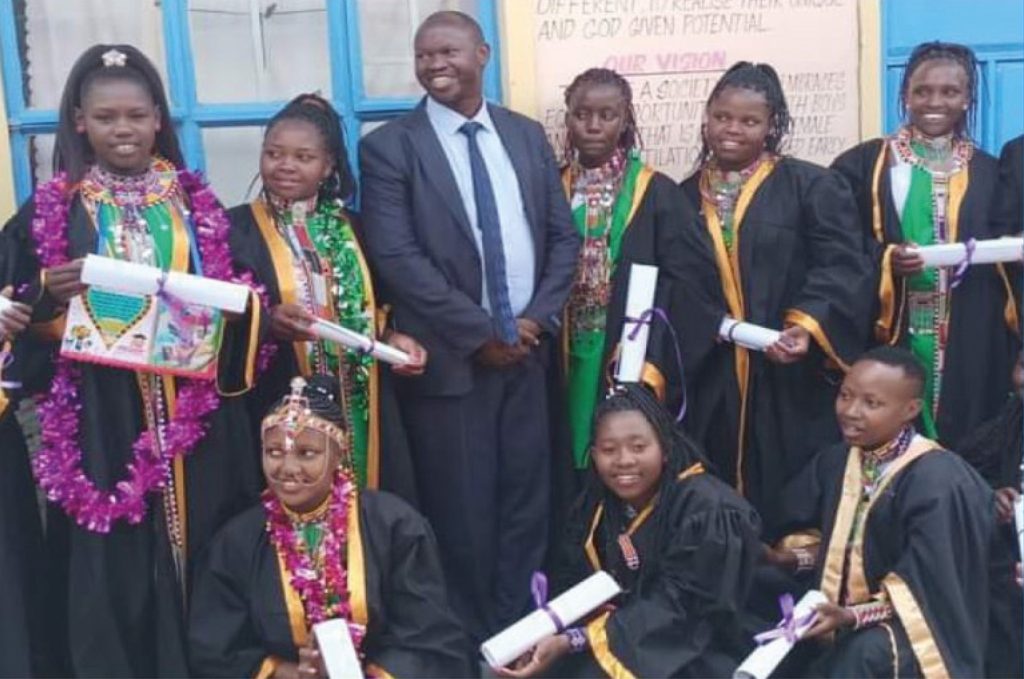
One of many standout organisations we support is Mission With A Vision in Kenya. They take in girls who have been rescued from forced marriage and were at risk of female genital mutilation. They won an award from the Kenyan government for excellence, and yet they’re struggling to survive financially. We’ve been fundraising on their behalf.
It’s painful to watch them going through these struggles because these girls are reliant on them. But the results speak for themselves – girls are growing up protected by them and leaving with qualifications, jobs and futures, or getting married to someone they chose rather than being forced into marriage. This pathway for girls who were trapped is working. This an example of what keeps me going.
What would you say to someone considering supporting Mission Direct?
If you’re not able to travel and join a team, there are other ways to support us. Pray for us – we can sign you up to receive a prayer email so you can see what our current prayer needs are. You can also financially support our work. By doing so, you’re contributing to everything we are doing – to our ability to support all these different projects.
When we build a school and look at how many children use it over 20 years, it works out as around £10 per child. We work with more than one school and do many other things also. So, supporting us and the work we do can go a long way. Your donation genuinely makes an impact.
We’re a small organisation intimately involved with the partners we work with. We’re able to have that level of care. We’ve not become too big where we lose that personal connection.
We generally don’t struggle to fund individual projects – the challenge is funding ourselves, which of course is essential. Without core funding for our operations, we can’t support any of these partners or send any volunteers. That is often what small organisations like ours need most.

Will
Super encouraging post. I just heard you interview on Premier Radio.
Keep up all you are doing for the Kingdom
Love
Sacha