Mission Volunteering
People
Posted: 12th March 2026
Reflections on 2025
Mission Direct · Kumi, Uganda
Every year in Kumi tells a different story, but the thread running through all of them is the same: faithful, sustained partnership between Mission Direct, local churches, schools, and communities, walking alongside each other to create lasting change. 2025 was no exception. It was a year of significant building progress, of a porridge fund that kept growing, of chickens changing lives, and of trees being planted in the hope of a greener future. Here is some of what that year held.
Building at Wiggins Primary School
Wiggins Primary School, a government school serving over a thousand children in the rural community south of Kumi, joined Mission Direct’s family of schools for the first time in 2025. With twenty teachers but only thirteen homes, six classrooms had been pressed into service as accommodation and the children left to learn in buildings from the 1940s, roofs leaking, lessons lost to the rain.
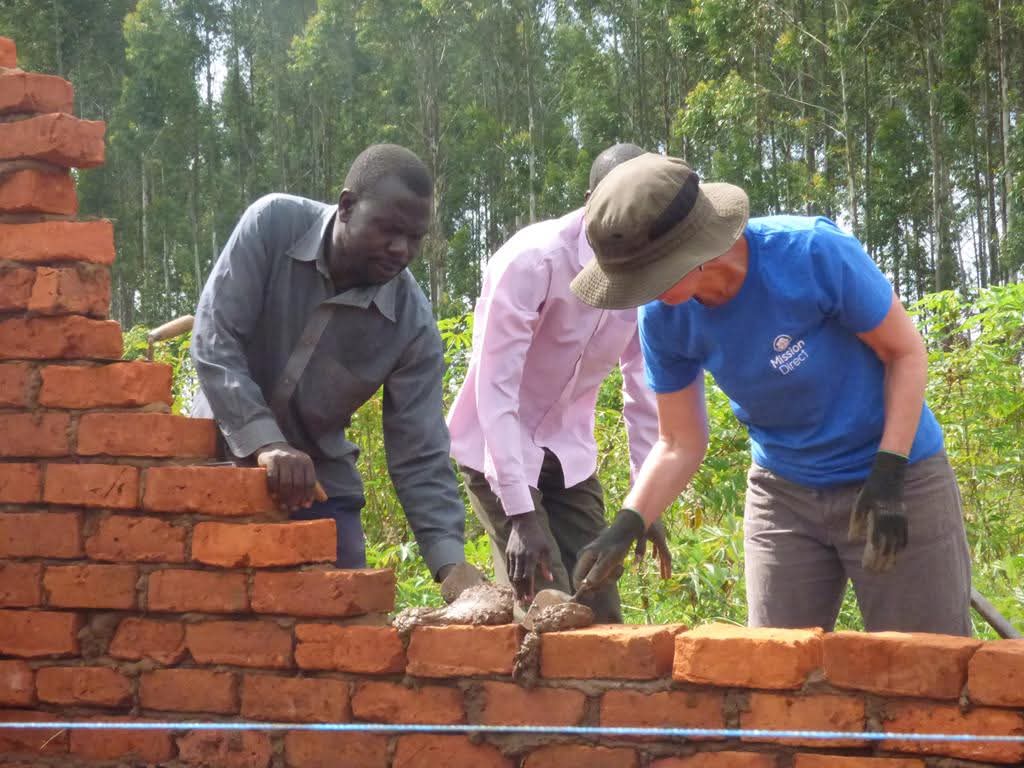
The project for 2025 was to change that: to build four new teachers’ homes, constructed by volunteers working alongside Joseph and his local team across three visits through the year, each team handing on to the next as the walls slowly rose.
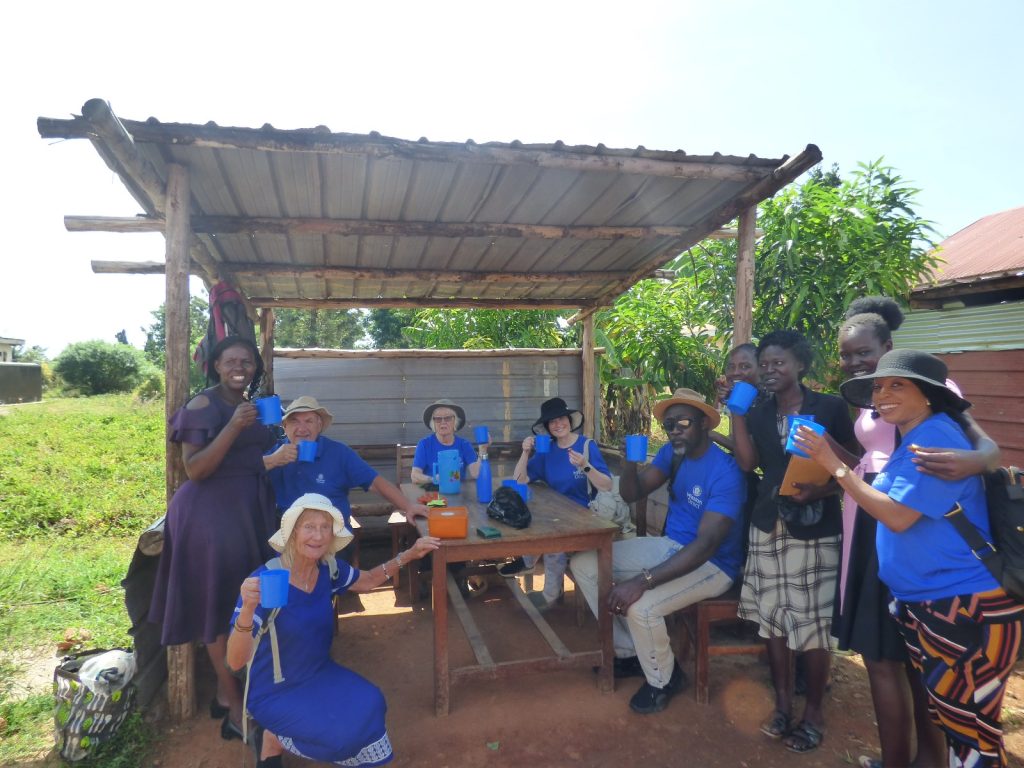
Team 1 in April laid the foundations and built the first walls, welcomed on day one with singing, dancing and extraordinary warmth…all before a single brick had been laid. The familiar rhythm of a Mission Direct build quickly established itself: Joseph and his skilled local team teaching volunteers the craft, the shout of “mortar, mortar, mortar!” carrying across the site, friendships deepening over shared porridge at break time.
By July, Team 2 arrived to find a completed floor slab waiting for them. Walls rose course by course through the weeks that followed – this was the largest single structure Mission Direct had built in Kumi – until roof timbers were delivered to site and the contractors took over between teams. The Kumi Express team in September found the roof already on, and turned their hands to plastering, painting, and finishing work.
By December, the homes were nearing completion. Contractors then began refurbishing the vacated classrooms, ready for children to walk into them at the start of the new school year in February 2026. Alongside the new build, leaking roofs on existing teachers’ homes were repaired and new windows and doors fabricated and fitted…teachers who had long learned to dread the rain would fear it no longer.
Four classrooms, returned to children. Class sizes reducing. Each year group properly streamed. One thousand children with a better chance at an education.
Alongside the building work, volunteer teachers engaged with staff at Wiggins, sharing ideas and resources. Around £500 was given towards books, science equipment and maths sets. A Scripture Union group was established at the school. Diana sewed buttons onto school uniforms at break time. The work, as always, was never only about bricks.
Feeding Hungry Minds
The Porridge Fund
Hunger is not a peripheral issue in education, it is central to it. A child who has not eaten cannot concentrate; a child dizzy with hunger will not retain what a teacher says. The Porridge Fund has long been one of Mission Direct’s most practical and direct interventions in Kumi, and 2025 brought a significant expansion.
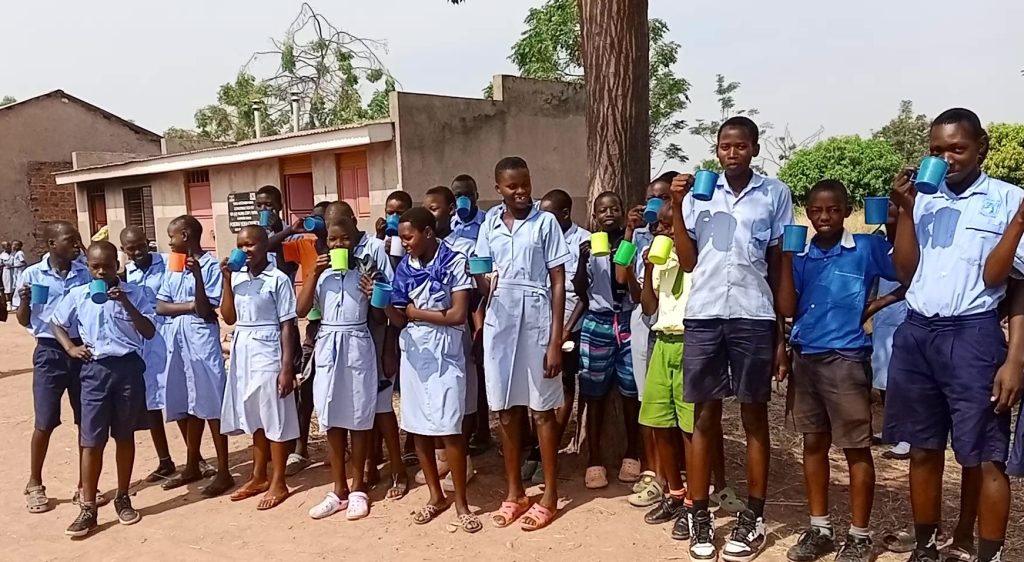
The programme, which had been running at Kumi Primary and Kumi Bazaar schools, was extended this year to include Wiggins Primary School and Ngora School for Deaf Children. Four schools. Four hundred bowls of porridge, every single school day. That is £20 per day, roughly £4,800 per year and just short of 100,000 bowls across a full year.
The results at Kumi Bazaar speak for themselves. In the 2024 Primary Leaving Examinations, 86% of Bazaar’s candidates achieved a Division 1 result, placing the school ahead of every private school in the area. It is a government school, in a poor district, and the commitment of its teachers is the primary driver of that success. But the Porridge Fund plays its part, ensuring the children who sit those exams are not doing so on empty stomachs.
“Since we have started providing some food for the candidate class, the exam results have improved significantly.”
The Chickens That Changed Everything
Some of the most significant change happening in and around Kumi in 2025 has been driven by something modest: a chicken. The Chicken Programme, run by Atutur PAG and funded through the St Albans Diocese Harvest Appeal, has been running for a number of years and continues to bear fruit well beyond what was originally imagined.
The model is straightforward: women attend a day of training – including animal husbandry, health and managing a small enterprise – and at the end of the day, they leave with chickens. By July 2025, seven hundred and sixty-five people had received that training, and over three thousand chickens had been distributed between them.
What those women have done with them is remarkable. Eggs sold, flocks grown, school fees paid, medical costs covered, nutrition improved. Women who started with a handful of birds have joined Village Savings and Loans Associations, building financial resilience week by week. Ajulang Loyce sold her chickens and bought three sheep. Others have invested in additional land, hired labour for their gardens, and expanded into new crops. The income is circulating locally, creating employment and economic activity beyond the original beneficiaries.
“This project has caused a multiplier effect in the households of these women and also in the community, extra monies used to invest for the future, to avoid the syndrome of hand to mouth.”
The programme is expected to reach self-sufficiency by the end of 2026. When it does, it will continue not because of outside funding, but because the women of Kumi have built something of their own.
Chickens also featured in the work of the Kumi Mothers Union this year. Alongside food support for isolated elderly people and single-parent families, the teams brought seeds and chickens – small but meaningful steps towards self-sufficiency for people who have very little and no state safety net to fall back on.
Planting for the Future
Trees, Orchards and Bees
At Ngora School for Deaf Children – one of only three specialist Primary schools of its kind in Uganda – a quieter, longer-term kind of change has been taking root. Ngora’s motto is “Never Give Up,” and it earns that motto. Deaf children are often the last in a family to be sent to school; boarding fees that seem small by UK standards are beyond the reach of many families; resources are stretched and food has sometimes run short. Signing all day uses more energy than most people realise.
In 2025, Mission Direct’s support at Ngora has taken several forms: new classroom floors laid to replace dangerous, pot-holed surfaces; dormitory beds repaired; the solar lighting system restored after failure (prompting a joyful message from Head Teacher Stella Patience; “There is no more darkness”); and Ngora added to the Porridge Fund, ensuring regular food support each term.
But the project with perhaps the longest reach is the expansion of the school’s orchard, apiary and tree nursery, made possible by the St Albans 2023 Harvest Appeal. It is a project with multiple, interlocking benefits: the orchard provides food for the children; the tree nursery sells seedlings into the local community, generating income for the school; the bees support the environment and in time will produce honey; and the whole project is woven into the curriculum, giving children learning through their own hands.
Similar tree-planting work is taking root at Kapolin Church, where the church and local individuals have donated land for a climate change initiative. In a region where unpredictable rainfall and environmental pressures are felt acutely, every tree planted is a statement of hope – a small investment in the long-term health of the land and the people who depend on it.
The trees face the challenge of the dry season, but they are there, growing.
People, Always People
Behind every project and every statistic in Kumi is a person. The year has been full of them.
Dinah, deserted by her husband with five children, received a home built by volunteers as well as food, a jerry can, seeds, and oxen hired to plough her land. Susan was introduced to Team 2 before they had even arrived, a community’s way of saying: this person is waiting, this person matters. Christine and Richard’s home, begun by one team, was completed by another – the family photographed standing outside their new walls. Magdalene, identified after the Express Team had already left, will have her roof replaced thanks to funds they left behind.
Margaret, a young deaf girl at Ngora, passed her Primary Leaving Examinations this year and will move on to a specialist secondary school. Kevin – a girl’s name in Uganda – was supported to start a tailoring business. Kumi Prison continued to be a place of worship and practical care, with volunteers describing visits there as among the most profound experiences of any trip.
There is also the ongoing story of the school results. Young people at Kumi Bazaar, Wiggins, Kumi Primary and Ngora are sitting examinations, passing, moving forward – quietly, in their own way, building futures. Mission Direct does not build those futures. The teachers do. The students do. But Mission Direct can make the conditions a little more possible.
A Year in Review
At the end of 2025, four teachers’ homes at Wiggins stood nearly complete. Four schools had received daily porridge. Hundreds of women across the Kumi district had learnt to tend chickens that are changing their families’ lives. A young woman started a tailoring business. A deaf school has light again. Trees were planted and started to grow.
None of this is a beginning. It is a continuation — of relationships built over many years, of trust earned slowly, of partnerships that have proved their depth. 2025 is simply the latest chapter in a much longer story.