“And how are they to hear without someone preaching?”
Romans 10:14
I was reflecting on something that came up quite a lot during our time in the DR – why being there matters so much when we could simply send money.
Of course, financial support is important. Projects need funding and giving makes things possible. But there really is no substitute for being there.
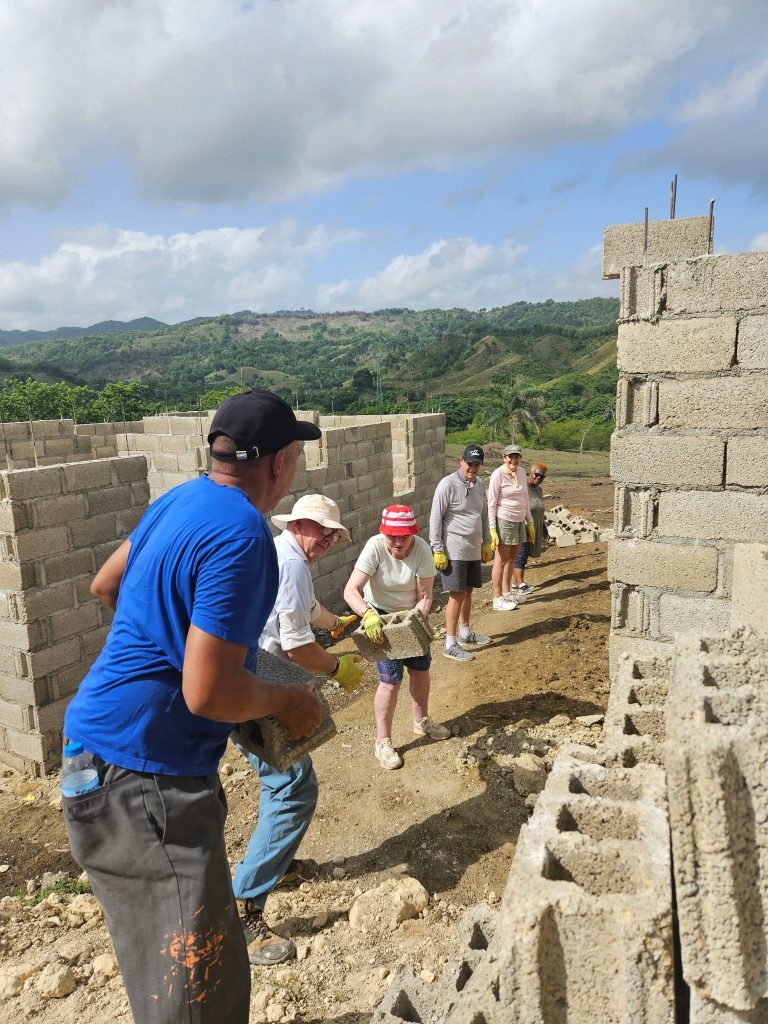
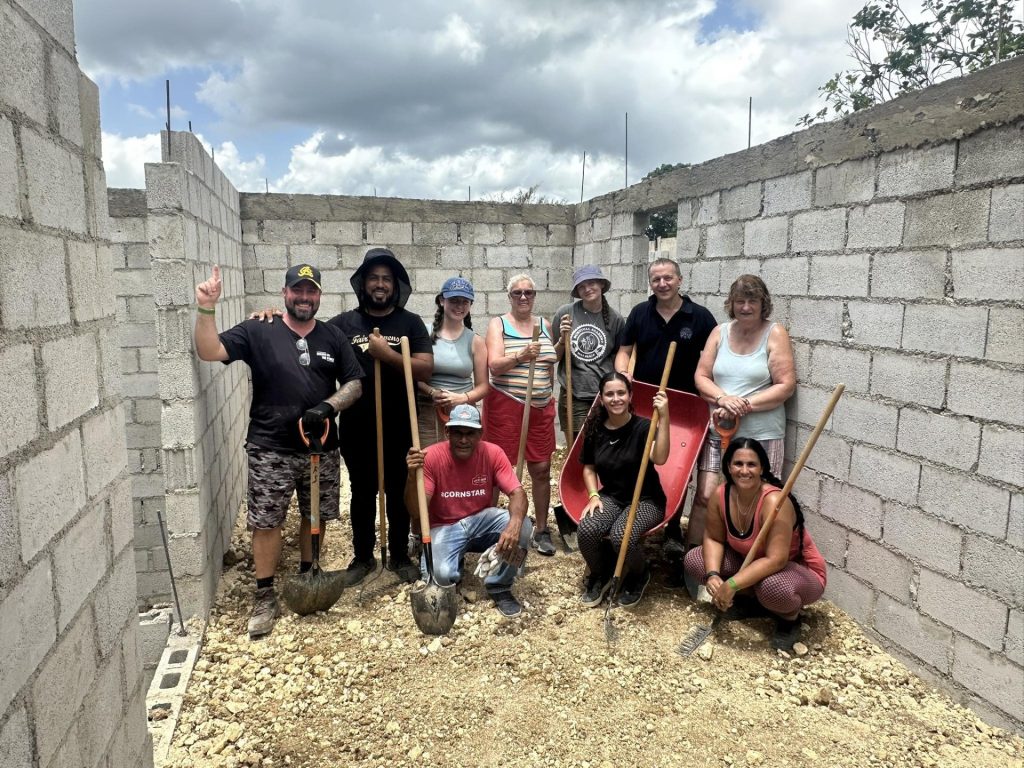
One of the 2026 teams on the building site in the Dominican Republic. Working together alongside our partners Samaritan Foundation to build a home for a family in need.
I was thinking about the appeal I wrote for Nkapillli School in Kenya and the work of Sister Clementia. I could write an email explaining the situation, the school, the children and what they needed. But the volunteers who had actually been there brought something to that appeal that an email alone never could.
They had seen the children.
They had walked through the landscape.
They had sat with people and heard their stories.
They understood the reality behind the words.
And I think that changes how we respond.
You can read about poverty, disability, lack of resources or the challenges a community faces, but when you have actually stood there, looked someone in the eye and heard their story, it becomes much more personal.
And that’s what I love about mission.
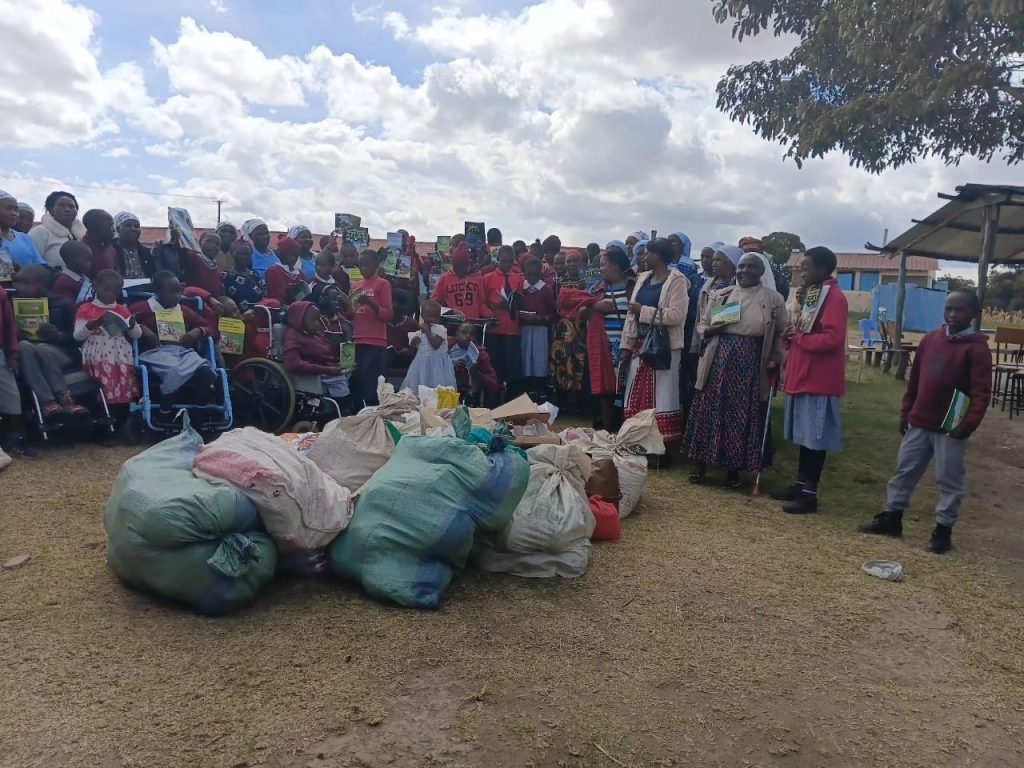
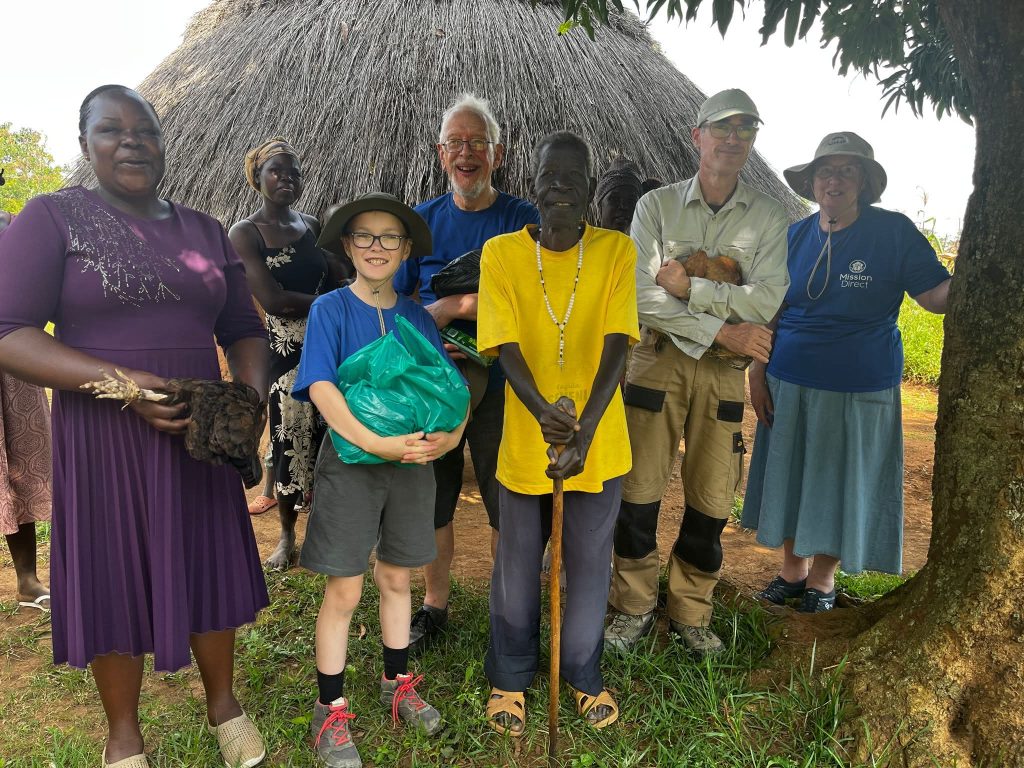
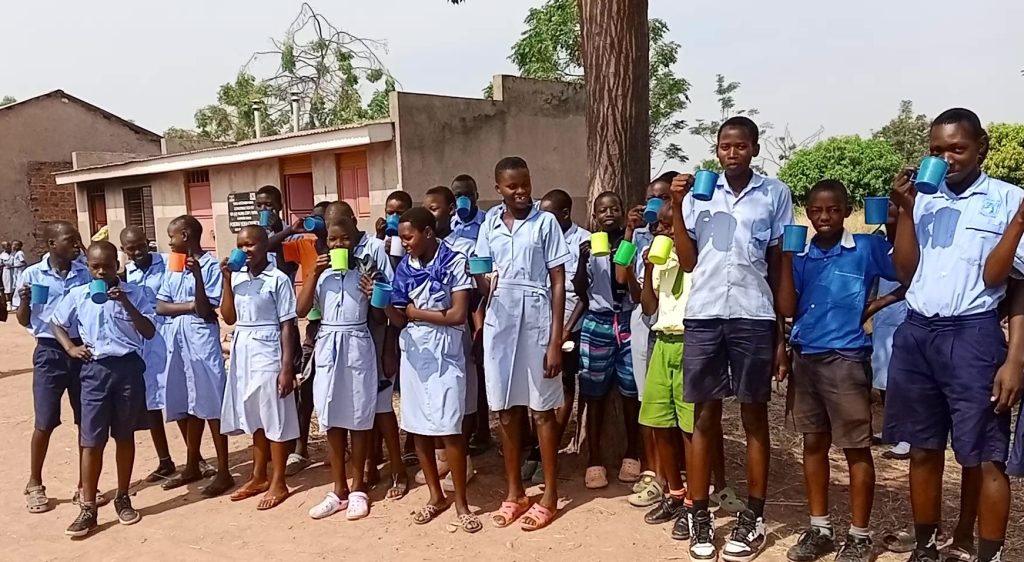
Sister Clementia, staff and children from Nkapililli School rejoice over the food and provisions that money from the appeal has provided. Thank you to all who responded.
We don’t just go to make a difference to someone else. Sometimes God uses the experience to put a burden in us.
This year in the DR, I saw people arrive simply expecting to serve for two weeks, but leave thinking, I need to do something more.
And you never know what God will do with that.
Someone may go home and continue supporting a project. Someone may tell their church. Someone may give sacrificially. Someone may encourage someone else to go.
We may never see the full impact of those two weeks.
But we can be sure that something will have changed.
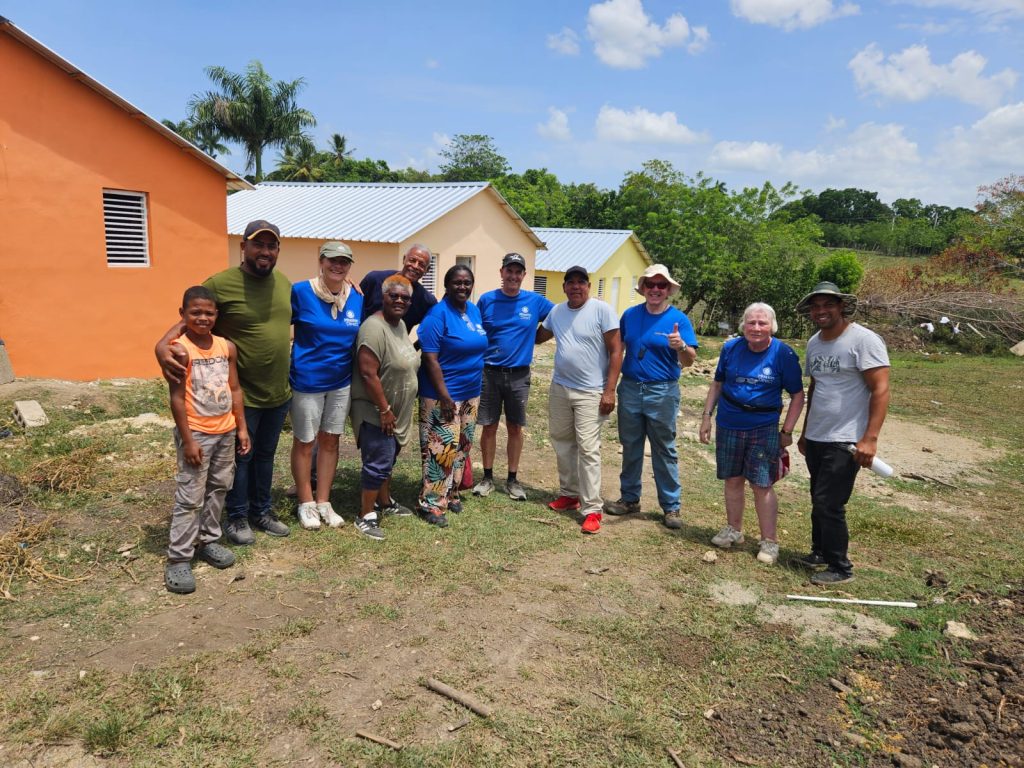
Presence matters. Seeing matters. Hearing matters. Getting involved matters.
As long as we have the ability to go, we should go.
As long as we have the ability to give, we should give.
And as long as we have the opportunity to serve, we should serve.
Because sometimes God doesn’t just want to use us to meet a need — He wants to use what we see and experience to change what is happening in us.
“Financial support can make a project possible, but there is no substitute for being there. When you see the children, hear their stories, walk through their communities and put your own hands to the work, something changes in you. And sometimes the greatest thing that happens on a mission trip is the burden God puts in someone’s heart that they carry home with them.”
Simone Olagoke
Regional Manager, Mission Direct
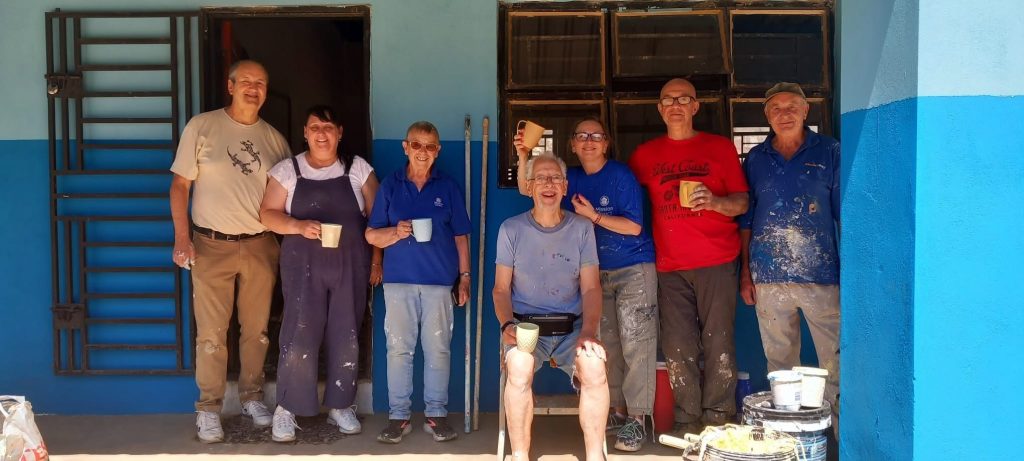
Chris Wells likes a line from a John Bell hymn that seems to match his experience of going to Zambia: ‘Will you go where you don’t know and never be the same?’ It is a poignant, testing question, asking for commitment and courage. For years, Chris’s life didn’t allow it – until, at 78 and grieving his wife, Chris picked up the phone to Mission Direct. Six months later (in 2024) he travelled to Zambia, knowing little about the country and nothing of the people he would meet there, not yet realising that the trip would open a new chapter of his life.
He had for years admired Mission Direct’s practical, hands-on work, and liked the idea of building something tangible. But his wife would never have wanted to go to Africa, and until she died unexpectedly the previous Christmas, he had never imagined going without her.
After she died, he rang Mission Direct’s Relationships and Volunteer Manager, Jackie Johnston, to ask whether he was too old to take part. Jackie listened to his story, reassured him that age was no barrier if his health allowed, and suggested Zambia as a first trip – an easy transfer from the airport, a pleasant climate and a straightforward first trip. It was a short conversation, but without it, none of what followed would have happened. Chris went. And from there, his world opened out.
That first trip gave Chris two weeks on a Mission Direct project helping to build a school classroom in Zambia, work that suited the practical side of him.
The experiences of those weeks changed everything. Two local lads took Chris to a school in one of the poorest compounds in the region and introduced him to its head teacher, Eneless. What he found there amazed him: almost nothing in the way of resources or facilities, but a school full of happy and excited and yet very poor and vulnerable children who were clearly loved, encouraged, cared for and protected.
He wanted to stay in touch when he returned home; after some delay, a reply came back and a new relationship began to take root.
Two years on, Chris and Eneless are in contact most days. They are working together on a project to buy land for a new school. He is raising funds for this project and for more immediate issues like school uniforms and shoes for children in the last Primary year who would not be able to afford to go on to Secondary without this support.
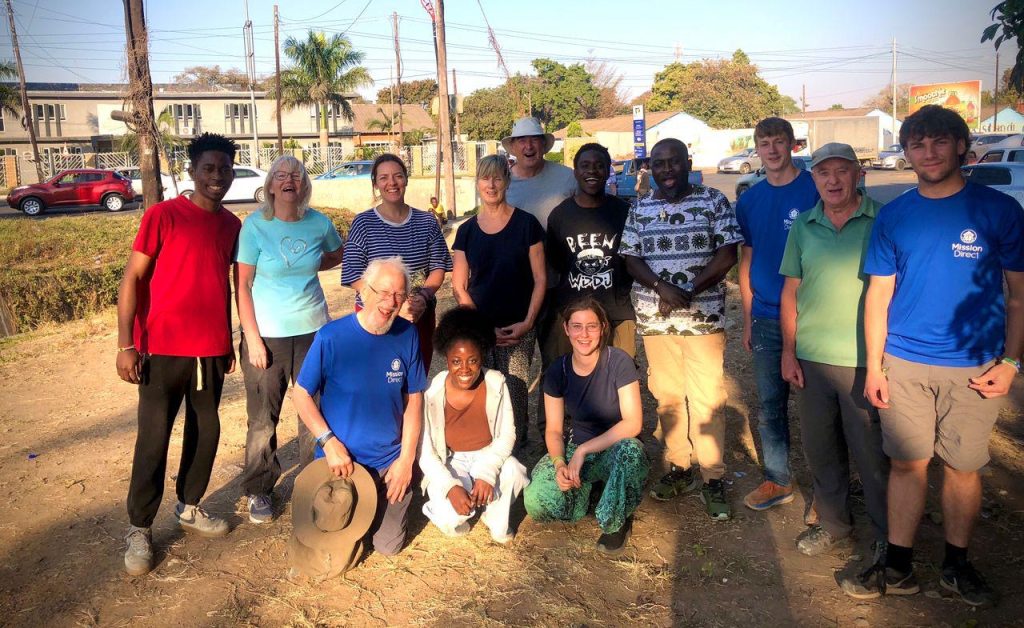
In Summer 2025, Chris joined a Mission Direct team in Kumi, Uganda, and then flew to Zambia to live for a week with Eneless and her family before joining a Zambia Mission Direct team. This year he returned to Zambia with Mission Direct, again staying on to live with Eneless. Jackie and the team have put in extra time and care to accommodate his plans for staying on longer, fitting them around Mission Direct’s own trips so that one supports the other.
As Chris says himself, none of it would have happened without that first call and the door Mission Direct opened. Without Jackie’s introduction, and the team’s ongoing support in making his return visits possible, the connections that now mean so much to him would never have been made. What began as a short volunteering trip has grown into a far wider world of friendship, purpose and commitment – one Chris has helped shape through his own energy and willingness to keep saying yes, and one that Mission Direct has kept finding ways to support.
Chris is candid that none of this was predictable. ‘If someone had told me three years ago that I would become obsessed with Zambia, I’d have said that’s nonsense,’ he says.
He came home from that first trip overwhelmed – ‘buzzing for months,’ as he puts it – telling all those he met and giving fund-raising talks, his enthusiasm bubbling over. Retirement, bereavement, and the time and resources that came with later life gave him room to say yes.
It is not a model for everyone, and Chris would be the first to say so. But it is a reminder that an open door – the one Mission Direct opened with a single phone call – can lead much further than anyone expects when someone is ready, willing and able to step through it.
Alongside the friendships and fundraising, something less visible has changed too. Chris admits he was ‘a bit of a flaky Christian.’ One of the most surprising highlights of his first Mission Direct trip was the 7.30am devotional time with the team. He did not expect much from it, but the birdsong, the cool morning air and the close bonds of shared worship became a valued feature of the trips.
His experiences have altered his worship back home. When a hymn mentions the hungry or the homeless, he no longer thinks in general terms; he thinks of specific situations and people. His faith, he says, has become more concrete, more personal, more alive.
The story is not without pain. Chris speaks openly about the limits of what can be done for the street children the Footprints team supports. Some are quite young, all are very vulnerable, and the need can feel overwhelming. He remembers standing with a street girl in great distress, able to offer little more than his presence, concern and prayers.
There are no easy fixes. The Footprints team rarely gives food to the children on the street; it wants to encourage them to go to support centres where they can be fed, counselled and helped properly. Chris now understands how much patience and perseverance is needed to help each child. That may be what gives this story its depth. The joy is real – the interactions with the school children, the friendships within the team, the sense of purpose – but it sits alongside feelings of helplessness, sadness and humility. Chris does not pretend otherwise.
‘Is there anyone out there who is thinking about volunteering but cannot decide?’ Chris asks, it is a question he is well placed to answer. He quickly puts aside the idea that you need to bring building skills – if you are reasonably fit, you can easily cope with what is needed. There are also lighter tasks like painting. The harder thing to explain is what cannot be planned – the way a single experience can change your whole outlook on life.
At 78, grieving his wife and uncertain what might come next, Chris Wells took a step into the unknown. After that first call to Mission Direct, he found new people, new places, a renewed faith and a new sense of purpose.
‘I cannot wait to get back to Zambia this summer,’ he says, ‘joining a team and then spending time with Eneless and her family and the school children. I’m so excited. Will I see you there?’
Or, as the hymn says, he went where he did not know and was never quite the same again.
Mission Direct’s inaugural Mission Maker Month has not only raised more than £30,000 in just 30 days, it has also captured the attention of media across the UK.
Our month-long campaign encouraged supporters to raise funds in all manners of creative ways, from sponsored walks and cake sales to community events and sporting challenges.
Here are just a few of the headlines we generated:
• Keep The Faith – UK Christian charity invites supporters to step out in faith with 30-day fundraising challenge. Read Here
• The Comet – Mission Direct Hitchin aims to raise £30,000 in 30 days. Read Here
• Christian Today – England’s World Cup success raises money for international development. Read Here
• Charity Today – UK charity raises £30,000 in 30 days as public rally behind campaign. Read Here
• Keep The Faith – UK Christian charity raises £30,000 in 30 days. Read Here
Mission Direct Chief Executive Wil Horwood said the campaign demonstrated the power of people coming together with a shared purpose.
“Mission Maker Month has shown what’s possible when a community comes together. Every fundraiser was different, but every one of them mattered. It’s easy to think one small act won’t make a difference, but this campaign has proved the opposite. Hundreds of small acts of generosity have combined to create opportunities that will change lives for years to come.”
We want to thank every supporter, volunteer, fundraiser, church and partner who took part in Mission Maker Month. Whether you organised an event, made a donation, shared the campaign online or prayed for its success, you helped make this first Mission Maker Month a tremendous success.
The fantastic media coverage has helped share the impact of the campaign even further, raising awareness of Mission Direct’s work and inspiring more people to become part of the mission in the months ahead.
From BBQs and cake sales to football pledges and birthday fundraising, our supporters have helped make our first-ever Mission Maker Month a huge success – raising more than £30,000 in just 30 days.
Throughout June, we invited people to take on a 30-day challenge and become Mission Makers by choosing their own way to bake, move, host, give or fundraise in support of our work with communities across Africa, Asia and the Caribbean.
The response was beyond anything we could have hoped for. Supporters, volunteers, trustees and our own team came together to show that when people unite around a shared purpose, even small acts of generosity can create a lasting impact.
“Mission Maker Month has shown what’s possible when a community comes together,” said our Chief Executive, Wil Horwood. “Every fundraiser was different, but everybody has mattered. It’s easy to think one small act won’t make a difference, but this campaign has proved the opposite. Hundreds of small acts of generosity have combined to create opportunities that will change lives for years to come.”
Supporters making a difference
Our team got involved too, with Wil, Relationships and Volunteer Manager Jackie Johnston, and Senior Administrator Louise Archer each taking on a ‘30 for 30’ challenge – asking 30 people to donate £30.
All three exceeded their £1,000 fundraising targets. Jackie, who is celebrating her 60th birthday this year, chose to ask friends and family to donate in place of gifts, turning her birthday celebrations into an opportunity to support communities around the world.
Our trustees also embraced the challenge.
Trustee Obi Abuchi, from Frimley in Surrey, raised more than £1,700 through a BBQ fundraiser after seeing our work in Uganda first-hand.
Fellow trustee Chris Knight, from Northamptonshire, hosted a cake afternoon complete with a tombola and Promise Sale. Chris has also experienced our work personally, having helped build a school in rural Cambodia last November.
“I support Mission Direct because I’ve seen what it does,” said Chris. “Short-term trips make a practical difference in some of the world’s neediest communities, and when you’ve been there and seen it yourself, you can’t help but want others to be part of it too.”
Every goal counts
Our Chair, Paul Holbrook, found a football-inspired way to get involved. His challenge was to ask 30 people to pledge at least £2 for every England and Scotland goal during the World Cup, matching every donation pound for pound.
Longstanding volunteer and supporter Susie Ryan, from St Albans, also rallied her own network to support the campaign.
“I love what this small charity does – giving children in some of the world’s poorest communities the chance of an education,” she said. “I was fortunate enough to volunteer with Mission Direct in Zambia and meet children whose lives were being transformed through school. This isn’t about me – it’s about the children and families who need opportunities many of us take for granted.”
Continuing to create opportunities
Since 2004, we have helped support more than 305,000 children through locally led projects across Africa, Asia and the Caribbean. We have contributed to the building of 55 schools and sent more than 600 volunteer teams overseas.
As a charity funded entirely through voluntary giving, we are able to respond flexibly and work alongside local partners to deliver projects shaped by the communities themselves.
With Mission Maker Month now complete, our focus turns to the volunteer teams heading overseas this summer and to preparing for future projects in 2027 and beyond.
“Mission Maker Month may be over for this year, but the work certainly isn’t,” added Wil. “The generosity we’ve seen over the past month will help create opportunities for children and communities for years to come. As we look ahead to future projects and volunteer teams, we’re incredibly grateful to everyone who helped make this campaign such a success.”
Thank you to everyone who baked, moved, hosted, gave, fundraised, shared and prayed during Mission Maker Month. Together, we have shown what can happen when a community comes together with a shared vision.
If you’d like to stay involved with Mission Direct, you can support our work through regular giving, join one of our volunteer trips, or help share the story of what we do.
As we look forward to working in the Dominican Republic building houses with the Samaritan Foundation, we are reminded of the inspiring Elio Madonia who started this incredible work there.
Elio Madonia was one of those rare individuals who chose action over indifference. In a world where it is easy to overlook hardship – whether at home or across the globe – Madonia dedicated much of his life to helping those most in need. As head of The Samaritan Foundation, he focused his efforts on building homes for impoverished families in the Dominican Republic, transforming communities and inspiring countless others along the way.
Madonia’s journey began in 1988 during a vacation with his wife, Lena. After taking a wrong turn, they stumbled upon the slums of Charamicos, a sight that left a lasting impression. Rather than turning away, Madonia felt compelled to act. He connected with a local pastor and visited families living in the area, deciding to build simple homes for those in need. That decision marked the beginning of a lifelong mission.
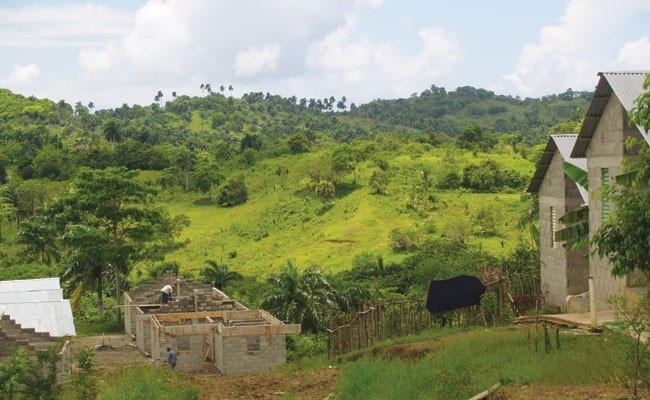
The first village, Maranatha, grew from a cluster of makeshift homes into a thriving community, eventually including hundreds of houses, along with a church, school, and medical clinic. What once had been a struggling slum became a place where families could live with dignity and hope for the future.
Initially, Madonia funded the work himself, viewing it as a personal responsibility rather than an organized effort. But as word spread, support began to grow. Volunteers and donors from Canada, the United States, England, Australia, and beyond joined his cause. Mission Direct were privileged to be among those who partnered with Madonia and The Samaritan Foundation. Over the years, the work expanded, and Madonia helped build multiple villages and more than a thousand homes for families in need.
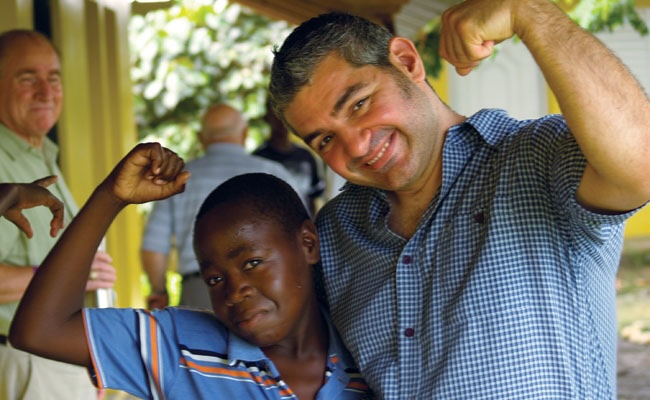
Despite the scale of his achievements, Madonia never considered his work a sacrifice. He often described his time in the Dominican Republic as some of the most rewarding years of his life. Guided by faith and compassion, he believed true happiness came not from material possessions, but from helping others and creating lasting change.
Those who worked alongside him remembered his humility and sincerity. He never sought recognition, yet his compassion was evident in the joy he shared with families receiving their new homes. Elio Madonia left behind more than houses and villages – he left a legacy of kindness, generosity, and service. Through his efforts, thousands found shelter, stability, and hope, and his example continues to inspire compassion in others.
Reflections on 2025
Mission Direct · Kumi, Uganda
Every year in Kumi tells a different story, but the thread running through all of them is the same: faithful, sustained partnership between Mission Direct, local churches, schools, and communities, walking alongside each other to create lasting change. 2025 was no exception. It was a year of significant building progress, of a porridge fund that kept growing, of chickens changing lives, and of trees being planted in the hope of a greener future. Here is some of what that year held.
Building at Wiggins Primary School
Wiggins Primary School, a government school serving over a thousand children in the rural community south of Kumi, joined Mission Direct’s family of schools for the first time in 2025. With twenty teachers but only thirteen homes, six classrooms had been pressed into service as accommodation and the children left to learn in buildings from the 1940s, roofs leaking, lessons lost to the rain.
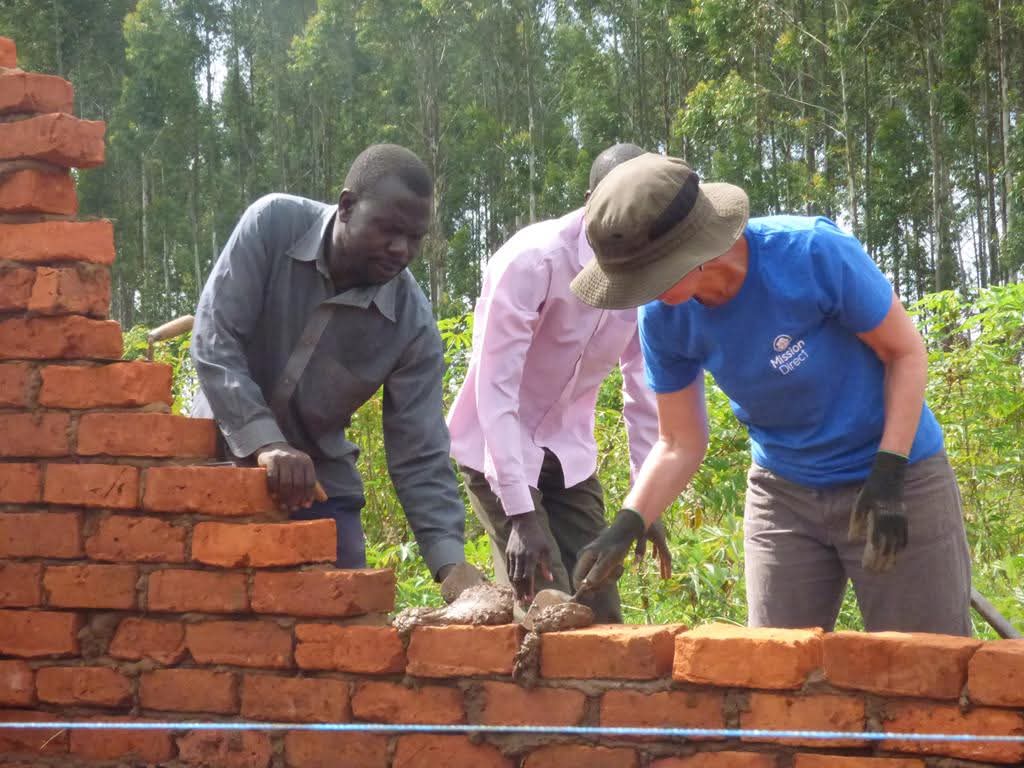
The project for 2025 was to change that: to build four new teachers’ homes, constructed by volunteers working alongside Joseph and his local team across three visits through the year, each team handing on to the next as the walls slowly rose.
Team 1 in April laid the foundations and built the first walls, welcomed on day one with singing, dancing and extraordinary warmth…all before a single brick had been laid. The familiar rhythm of a Mission Direct build quickly established itself: Joseph and his skilled local team teaching volunteers the craft, the shout of “mortar, mortar, mortar!” carrying across the site, friendships deepening over shared porridge at break time.
By July, Team 2 arrived to find a completed floor slab waiting for them. Walls rose course by course through the weeks that followed – this was the largest single structure Mission Direct had built in Kumi – until roof timbers were delivered to site and the contractors took over between teams. The Kumi Express team in September found the roof already on, and turned their hands to plastering, painting, and finishing work.
By December, the homes were nearing completion. Contractors then began refurbishing the vacated classrooms, ready for children to walk into them at the start of the new school year in February 2026. Alongside the new build, leaking roofs on existing teachers’ homes were repaired and new windows and doors fabricated and fitted…teachers who had long learned to dread the rain would fear it no longer.
Four classrooms, returned to children. Class sizes reducing. Each year group properly streamed. One thousand children with a better chance at an education.
Alongside the building work, volunteer teachers engaged with staff at Wiggins, sharing ideas and resources. Around £500 was given towards books, science equipment and maths sets. A Scripture Union group was established at the school. Diana sewed buttons onto school uniforms at break time. The work, as always, was never only about bricks.
Feeding Hungry Minds
The Porridge Fund
Hunger is not a peripheral issue in education, it is central to it. A child who has not eaten cannot concentrate; a child dizzy with hunger will not retain what a teacher says. The Porridge Fund has long been one of Mission Direct’s most practical and direct interventions in Kumi, and 2025 brought a significant expansion.
The programme, which had been running at Kumi Primary and Kumi Bazaar schools, was extended this year to include Wiggins Primary School and Ngora School for Deaf Children. Four schools. Four hundred bowls of porridge, every single school day. That is £20 per day, roughly £4,800 per year and just short of 100,000 bowls across a full year.
The results at Kumi Bazaar speak for themselves. In the 2024 Primary Leaving Examinations, 86% of Bazaar’s candidates achieved a Division 1 result, placing the school ahead of every private school in the area. It is a government school, in a poor district, and the commitment of its teachers is the primary driver of that success. But the Porridge Fund plays its part, ensuring the children who sit those exams are not doing so on empty stomachs.
“Since we have started providing some food for the candidate class, the exam results have improved significantly.”
The Chickens That Changed Everything
Some of the most significant change happening in and around Kumi in 2025 has been driven by something modest: a chicken. The Chicken Programme, run by Atutur PAG and funded through the St Albans Diocese Harvest Appeal, has been running for a number of years and continues to bear fruit well beyond what was originally imagined.
The model is straightforward: women attend a day of training – including animal husbandry, health and managing a small enterprise – and at the end of the day, they leave with chickens. By July 2025, seven hundred and sixty-five people had received that training, and over three thousand chickens had been distributed between them.
What those women have done with them is remarkable. Eggs sold, flocks grown, school fees paid, medical costs covered, nutrition improved. Women who started with a handful of birds have joined Village Savings and Loans Associations, building financial resilience week by week. Ajulang Loyce sold her chickens and bought three sheep. Others have invested in additional land, hired labour for their gardens, and expanded into new crops. The income is circulating locally, creating employment and economic activity beyond the original beneficiaries.
“This project has caused a multiplier effect in the households of these women and also in the community, extra monies used to invest for the future, to avoid the syndrome of hand to mouth.”
The programme is expected to reach self-sufficiency by the end of 2026. When it does, it will continue not because of outside funding, but because the women of Kumi have built something of their own.
Chickens also featured in the work of the Kumi Mothers Union this year. Alongside food support for isolated elderly people and single-parent families, the teams brought seeds and chickens – small but meaningful steps towards self-sufficiency for people who have very little and no state safety net to fall back on.
Planting for the Future
Trees, Orchards and Bees
At Ngora School for Deaf Children – one of only three specialist Primary schools of its kind in Uganda – a quieter, longer-term kind of change has been taking root. Ngora’s motto is “Never Give Up,” and it earns that motto. Deaf children are often the last in a family to be sent to school; boarding fees that seem small by UK standards are beyond the reach of many families; resources are stretched and food has sometimes run short. Signing all day uses more energy than most people realise.
In 2025, Mission Direct’s support at Ngora has taken several forms: new classroom floors laid to replace dangerous, pot-holed surfaces; dormitory beds repaired; the solar lighting system restored after failure (prompting a joyful message from Head Teacher Stella Patience; “There is no more darkness”); and Ngora added to the Porridge Fund, ensuring regular food support each term.
But the project with perhaps the longest reach is the expansion of the school’s orchard, apiary and tree nursery, made possible by the St Albans 2023 Harvest Appeal. It is a project with multiple, interlocking benefits: the orchard provides food for the children; the tree nursery sells seedlings into the local community, generating income for the school; the bees support the environment and in time will produce honey; and the whole project is woven into the curriculum, giving children learning through their own hands.
Similar tree-planting work is taking root at Kapolin Church, where the church and local individuals have donated land for a climate change initiative. In a region where unpredictable rainfall and environmental pressures are felt acutely, every tree planted is a statement of hope – a small investment in the long-term health of the land and the people who depend on it.
The trees face the challenge of the dry season, but they are there, growing.
People, Always People
Behind every project and every statistic in Kumi is a person. The year has been full of them.
Dinah, deserted by her husband with five children, received a home built by volunteers as well as food, a jerry can, seeds, and oxen hired to plough her land. Susan was introduced to Team 2 before they had even arrived, a community’s way of saying: this person is waiting, this person matters. Christine and Richard’s home, begun by one team, was completed by another – the family photographed standing outside their new walls. Magdalene, identified after the Express Team had already left, will have her roof replaced thanks to funds they left behind.
Margaret, a young deaf girl at Ngora, passed her Primary Leaving Examinations this year and will move on to a specialist secondary school. Kevin – a girl’s name in Uganda – was supported to start a tailoring business. Kumi Prison continued to be a place of worship and practical care, with volunteers describing visits there as among the most profound experiences of any trip.
There is also the ongoing story of the school results. Young people at Kumi Bazaar, Wiggins, Kumi Primary and Ngora are sitting examinations, passing, moving forward – quietly, in their own way, building futures. Mission Direct does not build those futures. The teachers do. The students do. But Mission Direct can make the conditions a little more possible.
A Year in Review
At the end of 2025, four teachers’ homes at Wiggins stood nearly complete. Four schools had received daily porridge. Hundreds of women across the Kumi district had learnt to tend chickens that are changing their families’ lives. A young woman started a tailoring business. A deaf school has light again. Trees were planted and started to grow.
None of this is a beginning. It is a continuation — of relationships built over many years, of trust earned slowly, of partnerships that have proved their depth. 2025 is simply the latest chapter in a much longer story.
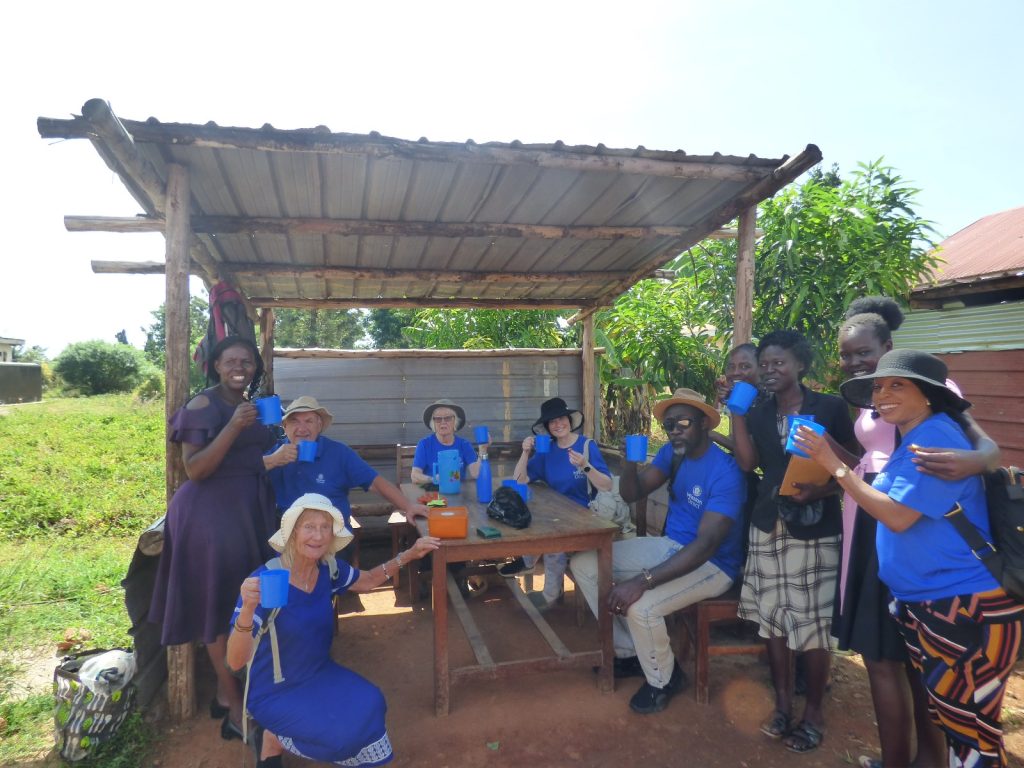
When you hear about the Mission Direct work building and feeding and planting and caring in Kumi, Uganda, it is important to pause and ask a simple question: who are the people helping to make this possible? Volunteer teams come and go, each trip bringing new energy and fresh eyes to the work. But there are two people that are consistently present – who are there to greet volunteers on arrival and who will be there for the people of Kumi long after they leave. Their names are Richard and Janet Bacon.
Richard spent his career in property. Janet spent hers in accountancy. Between them, they accumulated decades of professional experience – the kind that teaches you not just a discipline, but a way of thinking: how to manage a build, how to read a balance sheet, how to make things work in the real world. When they retired, they had every reason to put their feet up.
Instead, God’s path, lead them to choose to go to Uganda.
Their path to Kumi is also a personal story. Both had been widowed; both found their faith at the centre of their lives; and it was through their local church that they found each other. When they came together, they brought not just their individual histories but a shared sense of calling. Separately they had each walked alongside mission partners and understood deeply what it means to serve communities overseas. Together, they chose to commit themselves to the work of Mission Direct in Kumi…and they have not looked back.
Between them, Richard and Janet draw on their professional experience to support the full span of what Mission Direct’s work in Kumi requires. Richard is Country Manager for Uganda and the construction manager on the ground. He oversees every build, he knows the site, he works alongside Joseph and the local team, and ensures that what gets built gets built well. He is the steady hand behind the teachers’ homes at Wiggins, behind the repaired roofs and the new windows and doors, behind every wall that has slowly risen across the years.
Janet brings her accountancy background to bear in a different but equally vital way: driving and overseeing fundraising initiatives to keep the work alive. The Porridge Fund, the Chicken Programme, the homes built for families like Dinah’s…Janet understands not just the heart of the mission, but the mechanics required to make it happen.
Both roles are entirely voluntary. Richard and Janet are unpaid. They fund their own travel to Uganda. They give their time freely, and they give it generously – sustained not by their own strength but by God’s.
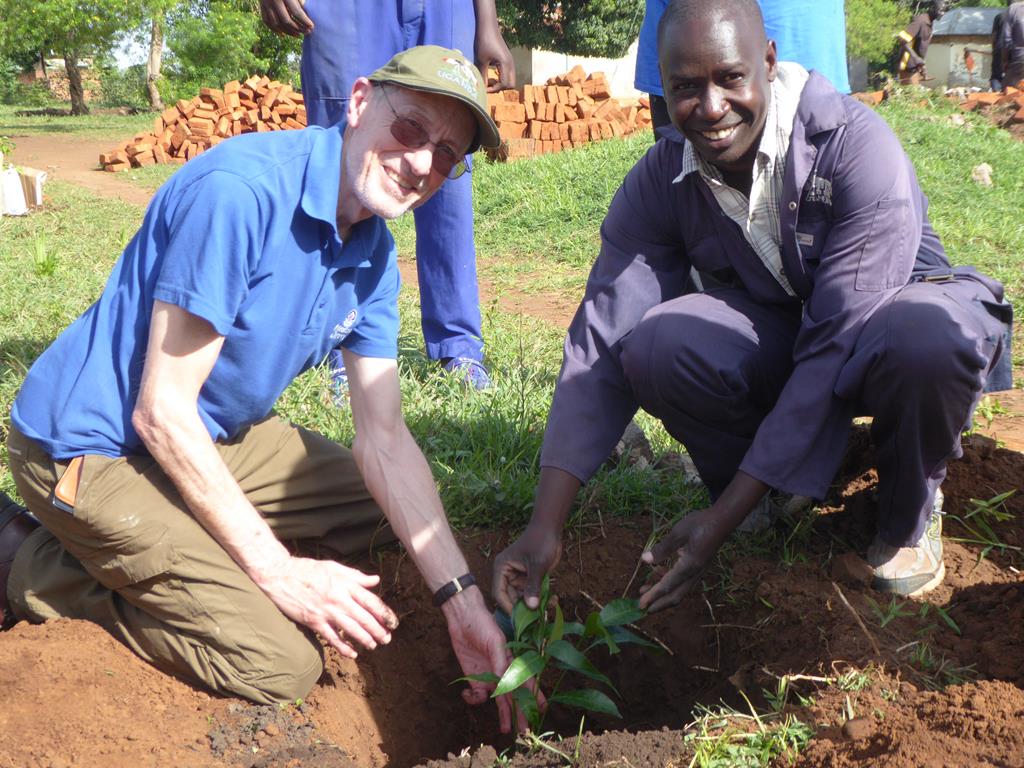
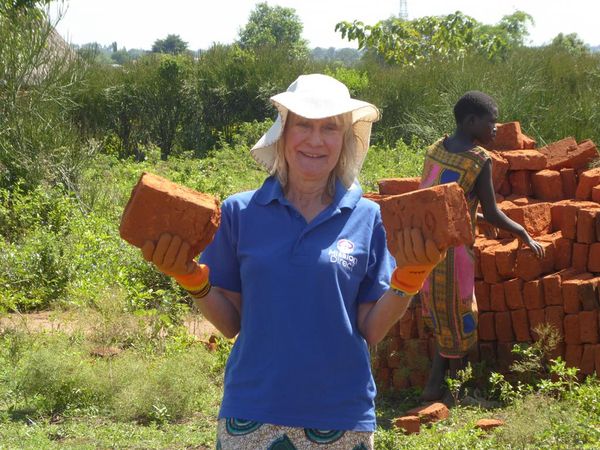
In Kumi, they are known simply as Mama Jan and Papa Richard. Those names say everything about the relationship they have built with the community there. This is not the relationship of managers with a project, or donors with a cause. It is something warmer and more lasting than that. Something genuine that they feel the Lord has called them to do.
Richard and Janet are a consistent, regular presence in Kumi – the people who always come back. When a new team of volunteers arrives, Richard and Janet will be one step ahead, ready to welcome them. Even from the UK, in between trips, they are in almost daily contact with their friends and partners in Kumi. The relationship does not pause because there are air miles between them.
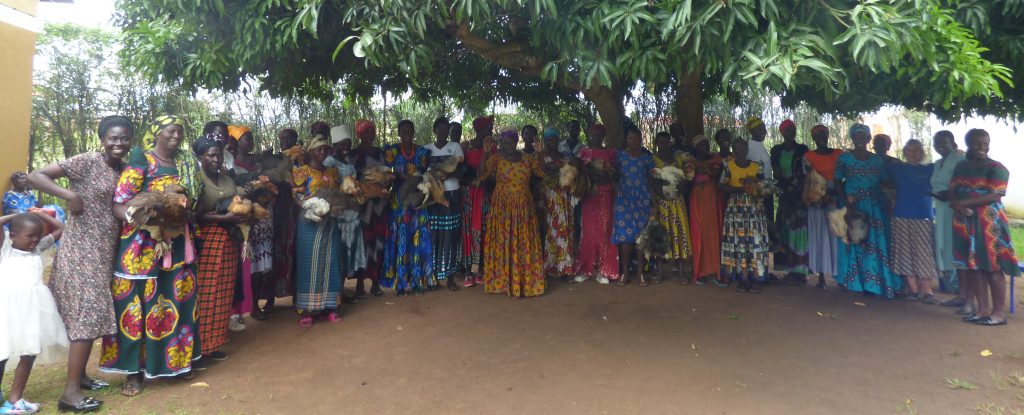
Ask Richard and Janet what they are trying to achieve in Kumi, and they will not speak about projects completed or targets met. They speak about momentum. About getting a ball rolling. About giving a community a lift, not doing the work for them, but creating the conditions in which the people of Kumi can drive things forwards for themselves and their neighbours.
This is what you will read in ‘A Year in Kumi’. The Chicken Programme that is on the verge of self-sufficiency. The school results that speak for themselves. The trees planted in the hope of a future that will outlast any single trip or team. The women who started with a handful of chickens and now invest in land and hire labour and send their children to school.
None of that happens without the long game being played. And alongside the people with whom we partner in Kumi and with the strength and direction from God, the long game is what Richard and Janet are there to play.
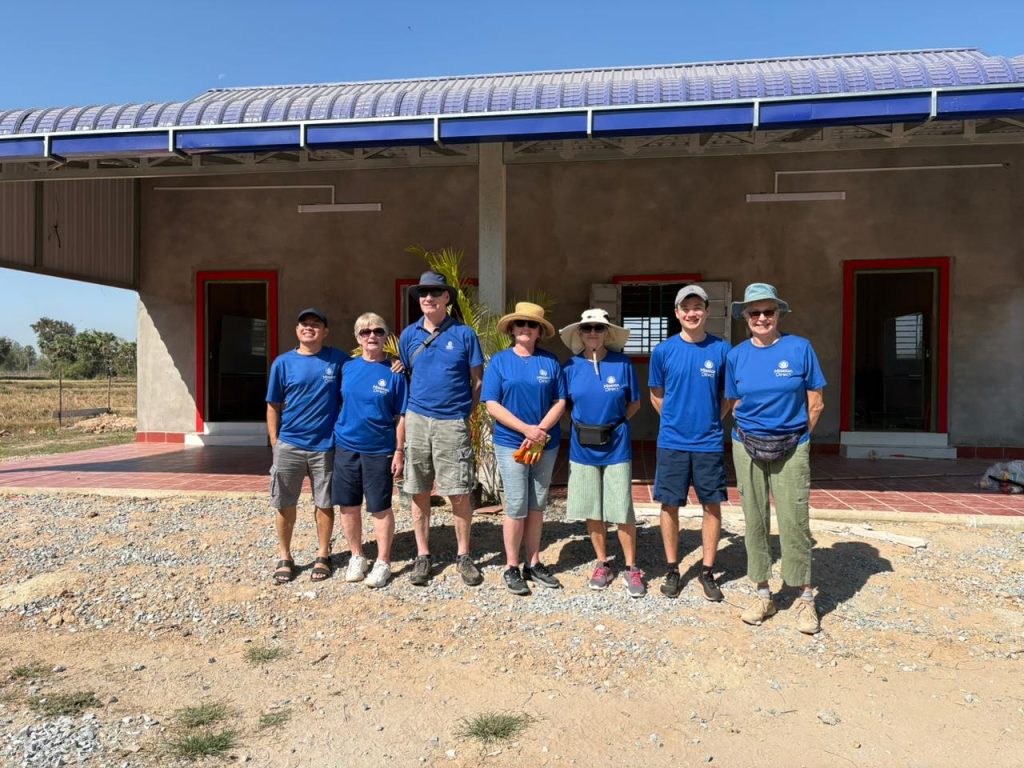
Maureen, a volunteer staff team member just returned from Cambodia, came back with her faith renewed; not just in the mission, but in what’s possible when the right people work together with the right intentions.
“The Cambodia trip restored my faith in working with a partner who carries out its promises,” she reflects. The work started by the November team had been completed to a high standard…high ceilings, tiled floors, electric fans, and a shaded canopy creating exactly the conditions young children need to learn and thrive. A design so well considered, Maureen believes it should stand as the blueprint for every classroom that follows.
Despite the heat – a relentless 35°C – the small team of three threw themselves into the work, painting classroom exteriors, laying bricks for perimeter fencing, and connecting warmly with the children at every school they visited. They were particularly moved by the SMILE orphanage, impressed by the care and facilities on offer.
Some moments were harder. A visit to Tuol Sleng and the Killing Fields cast a long shadow, as it always does. “It doesn’t matter how many times I’ve made these visits,” Maureen says. “It is extremely chilling.” But understanding Cambodia’s history, she believes, is essential to understanding its present.
And the present holds some wonderful stories. A question asked on a Friday morning about what could be done with a patch of wasteland next to the school had, by Monday, become a levelled volleyball court; 21 truckloads of soil, a local farmer with a tractor, and a community that simply got it done. “The look on the children’s faces when they arrived at lunchtime was a picture.”
There was also the story of a young woman who grew up in Happy Village, was supported through university by Serve Cambodia, and now works for them as an accountant. Quiet, lasting impact…exactly the kind Mission Direct exists to support.
As Maureen puts it: “It is truly amazing to see what can be achieved if you just have the faith to believe anything is possible.”
What drew you to this type of work?
I was drawn to this type of work many years ago due to experiencing a certain amount of disadvantage in my own life, but also having a father who was an example to me in his faith and compassion.
I grew up in a pretty poor household. My father was working class and lost his job in the 1980s. He was out of work for a decade.
My mother is German and I have a German name – Wilhelm – which caused me challenges growing up. At school I was both the German and the poor kid. I got my cousin’s hand-me-downs from Germany – fashion was years behind there compared to the UK. We didn’t have a TV or phone until I was nine or ten, and we never had a car.
So, I grew up understanding the limitations you have if you don’t have money and are an outsider. This wove into me a strong sense of wanting to help people. I understood and still understand what it felt like to be on the outside, to not have the things other people take for granted.
Although my father had very little, he prayed with me and my brother every day. He took us to church, and he read stories about Saints from the past. Throughout his life he cared for other people who were poor or facing lack of fairness or justice. In many ways he modelled a way of being that inspired me.
What’s a project or moment that exemplifies why Mission Direct’s work matters?
The school with the three classrooms in Zambia is a good example (referred to in part 1) because it demonstrated that we completed projects that other organisations had left unfinished and abandoned.
Another example comes from last year in Uganda. When our volunteers visited a medical clinic in Kumi, they were shown many oxygen tanks but only one regulator. This meant that the staff at the clinic regularly needed to choose between different patients who required oxygen because only one person could receive it at a time. This meant that they were making life and death decisions simply because of a lack of equipment.
When the volunteers heard this, they donated enough money to purchase four more regulators so that up to five patients at a time can have oxygen treatment if they need it. They had the means to do so and were motivated by compassion because they were there, and they were able to resolve the situation immediately. Countless lives will be saved as a result of a decision that was only possible because volunteers witnessed the problem first hand.
A final example is the Harvest of Hope School in Phnom Penh, Cambodia. Phnom Penh is built on a swamp, and this school is situated in one of the poorest areas of the city, which has undergone a great deal of development. Parts of the city are like any first world location with hotels, good roads and beautiful places to go – while other areas are still very poor. As a result of the development work, the water table has changed and many of these poorer areas now flood regularly.
Mission Direct had worked with the school before and due to remaining in contact and regularly visiting it, we were able to be aware of the developing problem. It was decided that the school could not be moved because there was no alternative available land in that community, so we demolished and rebuilt it after raising the existing plot of land sufficiently so that it would no longer flood. This has meant that the children in that area can continue to receive a high-quality education in a safe and hygienic environment.
If you go to church for most of your life, you will hear about missions. I remember in my youth thinking, I am meant to do something with my faith – what will I do?
But you can do quite a lot. You can sacrifice a holiday and be part of changing lives, and your own in the process. It takes people out of their comfort zone and the artificial restrictions in their lives. People discover they’re capable of far more than they thought.
How do you see Mission Direct’s role in international development evolving? What does responsible partnership look like in practice?
I’ve worked in international development for over 30 years. In that time, I’ve done training and visited lots of countries to see different approaches, and things change. We have to keep learning and adapting.
There are two books that have really shaped my thinking: ‘When Helping Hurts’ and ‘Toxic Charity’. Those books are about the unintended consequences of poorly conceived charity – the dehumanisation and lack of agency it can create in the people being ‘helped’. It’s not good enough to have good intentions. You need to think carefully about how your help actually impacts people. This is only possible when we follow the lead of those who know what is best for their community. So, when we work overseas, we are partnering with inspiring leaders to help them to realise their vision for their community and not ours.
People ask us why we don’t just send the money, but that doesn’t always work as well as people think. Practically being side by side with our partners means much more to them, and we are able to achieve so much more together working in real and tangible partnership.
What’s missing in a lot of international development work is the relational part. This really matters. When people go on our trips, this isn’t their employed job. They’re giving their time voluntarily. None of our overseas staff are employed by Mission Direct either. Everyone wants to be in that country. They’re there because they’re committed to the communities where they are serving and because they are motivated by faith.
What keeps you motivated during challenging times?
In my job all the problems filter to the top. That’s the nature of leadership. But I know what we’re doing matters, which motivates me. It becomes personal.
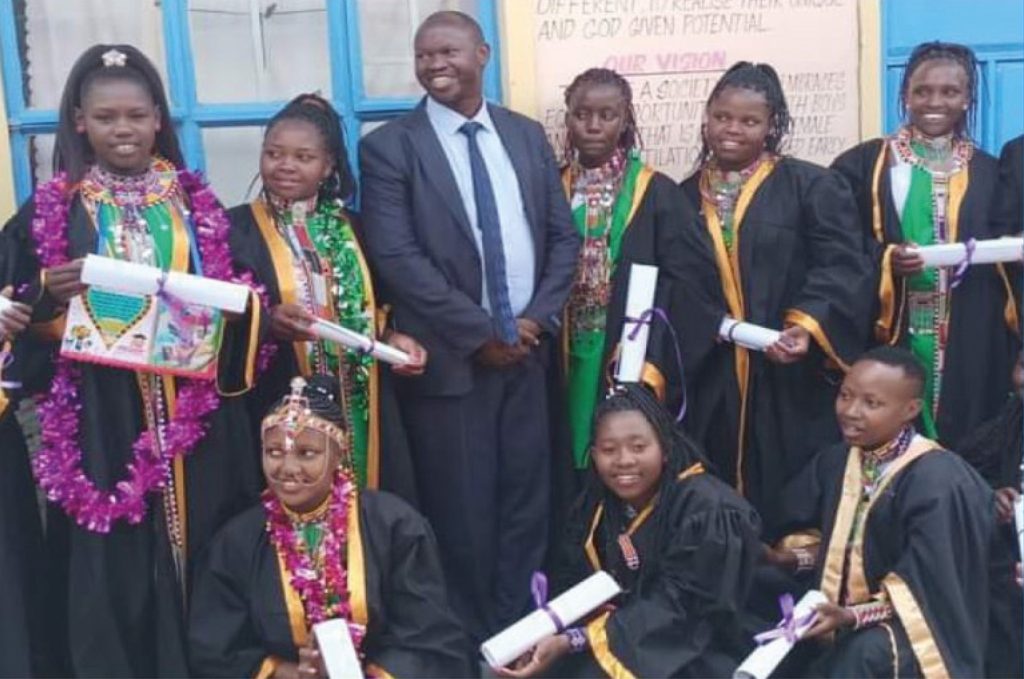
One of many standout organisations we support is Mission With A Vision in Kenya. They take in girls who have been rescued from forced marriage and were at risk of female genital mutilation. They won an award from the Kenyan government for excellence, and yet they’re struggling to survive financially. We’ve been fundraising on their behalf.
It’s painful to watch them going through these struggles because these girls are reliant on them. But the results speak for themselves – girls are growing up protected by them and leaving with qualifications, jobs and futures, or getting married to someone they chose rather than being forced into marriage. This pathway for girls who were trapped is working. This an example of what keeps me going.
What would you say to someone considering supporting Mission Direct?
If you’re not able to travel and join a team, there are other ways to support us. Pray for us – we can sign you up to receive a prayer email so you can see what our current prayer needs are. You can also financially support our work. By doing so, you’re contributing to everything we are doing – to our ability to support all these different projects.
When we build a school and look at how many children use it over 20 years, it works out as around £10 per child. We work with more than one school and do many other things also. So, supporting us and the work we do can go a long way. Your donation genuinely makes an impact.
We’re a small organisation intimately involved with the partners we work with. We’re able to have that level of care. We’ve not become too big where we lose that personal connection.
We generally don’t struggle to fund individual projects – the challenge is funding ourselves, which of course is essential. Without core funding for our operations, we can’t support any of these partners or send any volunteers. That is often what small organisations like ours need most.
What first connected you to Mission Direct?
Back in 2008 our church in St Albans had a fire, and our church hall burned down. As our church started raising money to rebuild, we knew we wanted to bless others at the same time – if we were being given a new building, we wanted to help be part of someone else’s building journey too.
We asked, “Where do we even start? Who can we partner with?” Three different people in my church, independently, suggested Mission Direct. That caught my attention.
I got in touch and asked, “Is there something that needs some money – and can we be part of that story?” Mission Direct told us about a couple in Zambia whose church was full of over 250 children – 120 of them orphans/vulnerable children desperate to go to school. They had a vision to open a school but no means to even buy land to build on. Just as our church in the UK was praying for the right project to give money to, this couple and their friends were praying in Zambia for a miracle to be able to build a school. Mission Direct were responsible for our finding each other and a long distance relationship that is still strong over 15 years later.
Initially our church gave £12,000 to purchase a plot of land. In 2010, we gave money to build classrooms and 23 people from our church went with Mission Direct to Zambia to help build the classrooms. The effect on those that went was so great that more church members and their friends quickly signed up to go later in the year and the following year and the year after that – each time providing more money to help build more of the school.
Today, the Crown of Life School teaches over 650 children from nursery through to the end of senior school in multiple classrooms and provides a free lunch for those who need it and so much more.

What surprised you most once you got involved?
I think I knew from day one that Mission Direct’s attention to detail, organisation and commitment to partnership was phenomenal, as I coordinated the early support from our church. My daughter, Shan, and I were able to join a trip to Zambia in 2023.
The trip deepened my love of Mission Direct and its vision for long lasting change to transform lives – in our case this was shown by providing access to free education for children who would otherwise not be able to go to school.
Can you share some moments that have really stayed with you?
One rhythm on trips is that we spent time working on the building site in the mornings then visited projects in the afternoons. We spent one afternoon with street children who came to a centre for a meal, meaning a couple of hours off the street for them and time to play.
We had fun playing rounders, hopscotch and skipping. For a while, it just felt like any other group of children having fun – but then the bell went and it was time for them to go back to the streets. I genuinely wanted to weep. These were young children living alone on the streets in Zambia.
I learned how incredibly hard it is to get children off the streets once they’re there. What I really loved, though, was seeing how the Crown of Life School – and so much of Mission Direct’s work – is
about reaching children before they ever get to that point. It’s about helping these children when they are young, before they end up on the streets.
Another afternoon, we visited homes near the school and an HIV/AIDS clinic. I vividly remember a teenager looking after two small children. The mum came back from the clinic whilst we were there, and we sat with her for about an hour listening to her story. It wasn’t her house; she was house sitting in a building site to protect it. Her husband had died of AIDS and she had been rejected by her family. There was no food in the home. She was boiling water so the children would think a meal was being prepared and hopefully fall asleep before they realised there was no food to be had.
We told her about the school: “Come to the school today and we will give you a parcel of rice, margarine, basic staples – and clothes and shoes for the children.” The aim was simply to get her there, so she could meet the school and understand that her children could attend the school for free; I was so pleased she went and this encounter has stayed with me.
What was the most challenging aspect of your experience?
One of the biggest challenges for me was fundraising for our building project. However, by asking for money for bricks we were also raising the profile of the work of Mission Direct. We found people were very happy to give money once we were brave enough to start fundraising, either by selling at car boot sales or cleaning toilets. It reminded me that in order to bless others we also need to be willing to be vulnerable, to ask, to trust that people want to be part of the story too.
How has the experience influenced your life since returning home?
The woman boiling water for her children so they would think food was coming is never far from my mind. It makes me question my own needs and wants – “Do I really need this?” – in a very practical way.
I’m encouraged by sharing good news stories and Mission Direct gives you a lifetime of good news to share. My daughter and I will always remember what we did and the sense that we were part of something that has, and continues to, change lives.
Just the other Sunday a man in our church, Pete, who has been on a Mission Direct trip, shared that a past student at the school has recently been selected to stand as an MP in Zambia. This is a child who without the Crown of Life School would never have been able to afford to go to school.
What would you tell someone considering getting involved?
I would say, without doubt, that you couldn’t choose a better organisation to partner with and put your trust in. Mission Direct know how to look after you. Not just with beds and food but with pastoral care, spiritual growth and plenty of fun and enjoyment thrown in too. Everything is so well organised, but with enough flexibility to adapt if needed.
For some volunteers, it might be their first time leaving the UK, which can feel daunting. Mission Direct offers a safe, carefully planned trip where you’re supported every step of the way – from your initial enquiry to returning home and reflecting.
Whether you’re able to travel yourself or want to support through your church like we did, there are ways for everyone to be part of the Mission Direct vision. It will be a positive life-changing experienced that you’ll never regret.
